
The Future of Off-Grid Living: Innovations in Caravan Solar Technology
The global RV solar panel market is projected to grow at a compound annual growth rate of 12 percent through 2030, driven by increasing demand for sustainable travel, the rise of remote work flexibility, and continuous improvements in battery storage technology. Caravan manufacturers are increasingly integrating solar-ready roofs as standard equipment on new models.
Key technology trends shaping the industry include high-efficiency monocrystalline panels that now exceed 23 percent efficiency, bifacial panels that capture reflected light from roof surfaces, lightweight flexible panels that enable curved-roof installations, and smart MPPT charge controllers that optimize power harvesting across multiple panel configurations with Bluetooth monitoring capabilities.
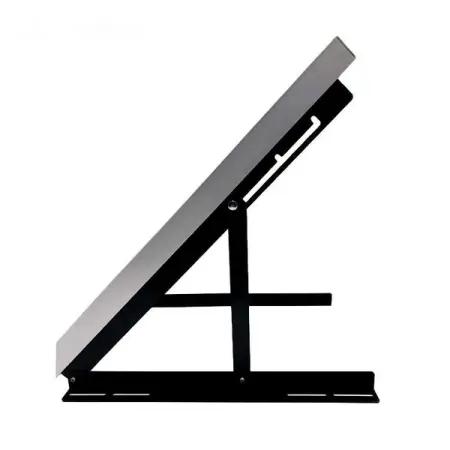
Green Caravan's aluminum Z-bracket mounting system enables secure, low-profile installation that minimizes wind drag while maintaining optimal cooling airflow beneath the panels. For advanced installations, adjustable angle brackets can be tuned seasonally for latitude-optimized solar collection, increasing annual energy yield by 15 to 25 percent compared to flat mounting.
Modern off-grid systems integrate solar panels with lithium iron phosphate (LiFePO4) batteries, pure sine wave inverters, and IP67-rated junction boxes for weatherproof electrical connections. Green Caravan supplies the mounting hardware, cable entry solutions, and waterproof enclosures that form the foundation of reliable off-grid electrical systems for caravans, RVs, and marine applications.
Market Growth and Regional Adoption Rates
The global RV solar panel market reached an estimated value of $420 million in 2024 and is on track to exceed $890 million by 2032, reflecting a compound annual growth rate of approximately 12.1 percent according to Grand View Research. North America leads adoption with roughly 38 percent of global market share, followed by Europe at 32 percent, while the Asia-Pacific region is the fastest-growing segment at over 14 percent CAGR. In Europe specifically, Germany has seen a 28 percent increase in solar-equipped caravan registrations since 2021, driven by both government incentives for renewable energy adoption and a cultural shift toward longer, more self-sufficient travel. Australia off-road caravan market is particularly instructive: over 60 percent of new caravans sold in 2024 included factory-fitted solar systems, up from 35 percent just five years earlier. This rapid adoption has created corresponding demand for standardized mounting hardware, weatherproof cable entry systems, and reliable solar connectors that can withstand extreme UV exposure and temperature variations in demanding environments.
Emerging Technology Trajectories
Several converging technology trends are reshaping caravan solar systems. The shift from 12-volt to 48-volt electrical architectures in premium RVs reduces current draw by a factor of four, allowing thinner copper cables and lower resistive losses. This transition increases the importance of high-quality solar cable and connector assemblies with proper XLPE insulation rated for higher voltages. Bifacial solar panels represent another breakthrough: these panels capture reflected light from their rear surface, boosting total energy harvest by 10 to 30 percent depending on roof surface reflectance. They require open-frame mounting that allows light passage, making aluminum Z-bracket designs particularly well-suited as they elevate panels with minimal surface contact. Flexible and semi-flexible panels are gaining popularity for curved caravan roofs where traditional rigid panels cannot mount, though they still require weatherproof cable entry solutions. The most significant trend is smart energy management: Bluetooth-enabled MPPT charge controllers, app-based monitoring dashboards, and automated load management systems that prioritize critical circuits during low-sun periods.
System Integration and Component Selection
The best off-grid solar systems are designed as integrated wholes rather than collections of individual components. Panel efficiency matters little if the mounting system allows vibration loosening after 500 kilometers of rough road. A high-end charge controller cannot compensate for undersized cables that drop voltage between the panel and battery. Green Caravan addresses these integration challenges by offering complementary mounting and electrical components engineered to work together. The solar panel mounting brackets provide the stable foundation, while the cable and connector range ensures that power travels from panel to charge controller with minimal loss and maximum weather protection. The IP67-rated junction boxes and cable entry glands complete the system, sealing the point where wiring enters the caravan interior against dust and water ingress. When selecting components, prioritize system voltage compatibility, connector standardization, and weather rating certification. A well-integrated 400-watt system with quality components will outperform a poorly integrated 600-watt system in real-world conditions, making component compatibility more important than raw panel wattage.
Looking Ahead: The Next Decade of Off-Grid Solar
The next ten years will bring fundamental changes to caravan solar technology. Vehicle-integrated photovoltaics, where solar cells are embedded directly into caravan roof panels during manufacturing, are expected to enter mass production by 2028, potentially eliminating the need for separate mounting hardware on new vehicles. Solid-state batteries promise to double energy density while reducing weight and charging time, making extended off-grid stays more practical. Perovskite solar cells, still in research stages, could eventually offer higher efficiency at lower cost than monocrystalline silicon. For current caravan owners, the practical takeaway is to invest in mounting and electrical infrastructure that can accommodate future upgrades. A well-chosen Z-bracket system, properly sized cables with MC4 connectors, and an appropriately rated MPPT controller will remain usable even as panels and batteries are upgraded to next-generation technology. The off-grid revolution is just beginning, and the choices made today determine how easily your system can evolve with it.